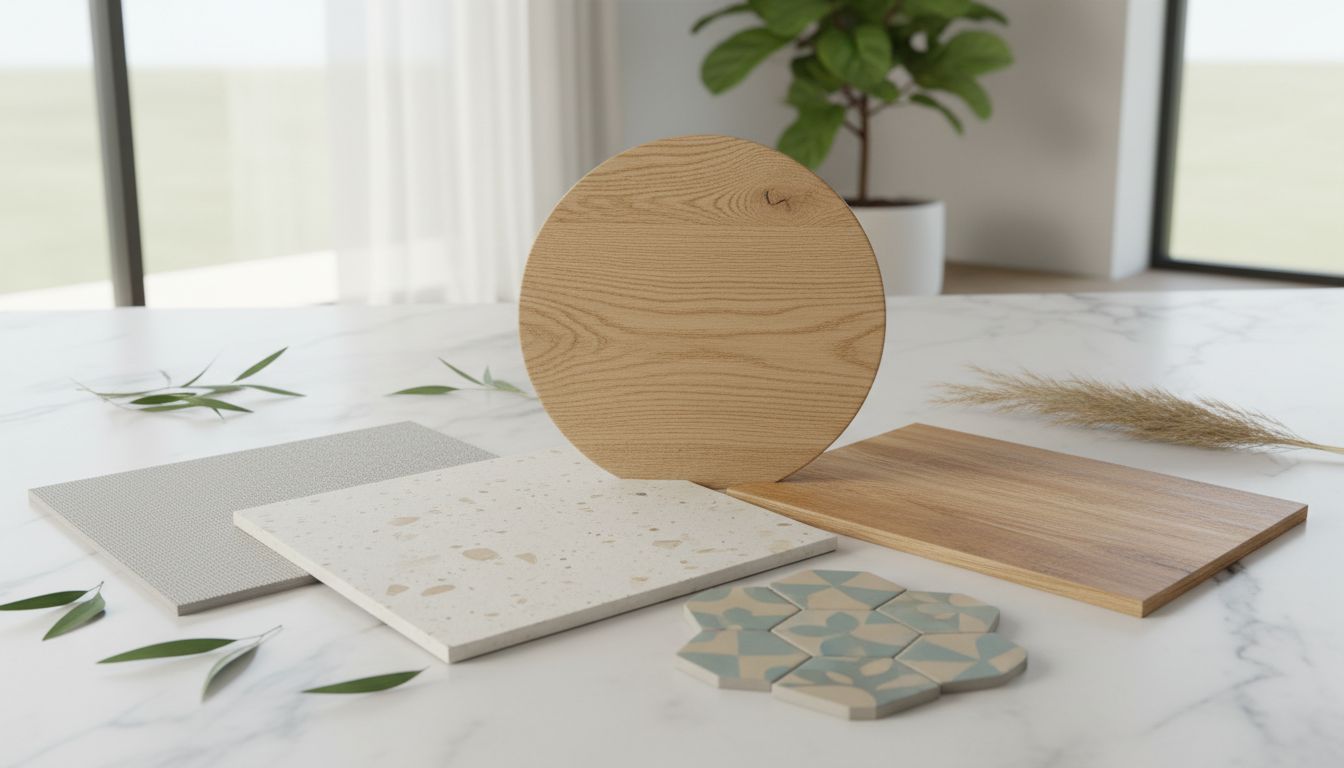
Choosing new floors for your home or business in West Long Branch, NJ involves more than appearance. Today’s buyers want materials that last, protect indoor air quality, and have a clear path at end-of-life. Durable, eco-minded choices save money and reduce environmental impact by lasting longer and avoiding frequent replacement.
Local contractors should guide customers toward documented claims,third-party certifications, emissions disclosures, and takeback programs,rather than vague “green” marketing. This article lays out what to look for underfoot so you can make a reliable, health-focused decision for your property.
Durability: why it’s the most important sustainability metric
Durability matters because the longest-lived products have the lowest lifetime environmental impact. The EPA highlights that more durable products reduce environmental burden simply by requiring replacement less often. For homeowners and small business owners, that translates to fewer disruptions and lower long-term costs.
When evaluating options, ask about expected service life under your specific use: heavy retail foot traffic differs from a residential living room. Also consider maintenance demands,some high-performance floors need regular care to reach their full lifespan, while others perform well with minimal upkeep.
Look for warranties tied to performance in real-world conditions and request references from local installs. A durable, well-installed floor in Monmouth County will typically outperform cheaper alternatives that fail sooner and generate more waste.
Health screens: low-VOC and formaldehyde considerations
Indoor emissions are a key health screen when choosing eco-minded flooring. The EPA calls out formaldehyde and VOCs as indoor air concerns and highlights pressed-wood products and some laminate floors as potential formaldehyde sources. Low-VOC and low-formaldehyde claims should be verified, not assumed.
Regulatory attention in 2026 underscores this point: the EPA proposed updates to formaldehyde emission standards for composite wood products, meaning standards and labeling requirements are tightening. When a product is wood-based or uses composite backings, insist on documented emissions testing and compliance statements.
Third-party labels that report emissions data (for example, CARB/TSCA compliance, GREENGUARD, or other recognized programs) provide more confidence than marketing phrases like “low-emissions” without proof. Your installer should be able to supply these documents before work starts.
Materials to consider: linoleum, cork, rubber, terrazzo, marble, and bamboo
USGBC’s 2026 materials briefing calls out linoleum, cork, and rubber as healthier alternatives and explicitly recommends avoiding vinyl (PVC) when possible. Natural linoleum,made from linseed oil, wood flour, rosin, jute, and limestone,remains a strong eco-minded option because it’s durable and made from natural inputs.
Cork is another good choice: it’s rapidly renewable, provides natural resiliency and insulation, and is biodegradable at end of life. Terrazzo and marble tile are often highlighted for very low emissions,EPA’s BEES guide notes they are largely inert and emit no VOCs,which can be ideal in spaces where indoor air quality is a priority.
Bamboo can be durable and attractive, but buyers should check the finish and binder chemistry: some bamboo (and cork) products have used urea-formaldehyde binders in the past, so verify current manufacturing practices. Rubber flooring works well in high-traffic or performance areas, but VOC profiles vary by product, so evaluate on a case-by-case basis.
Reclaimed, recycled content, and takeback infrastructure
Reclaimed content is now a formal benchmark in green building guidance. Under USGBC’s MRc Environmentally Preferable Products framework, a product must contain at least 25% reclaimed material to qualify for that credit. When reclaimed content is available, it reduces demand for virgin materials and supports circularity.
Recycled content matters, but end-of-life recovery makes a big difference. Tarkett’s 2025,2026 reporting illustrates this: the company used 160,000 tons of recycled materials in 2025 and has collected 129,000 tons of end-of-life flooring over 16 years through recycling centers. That kind of takeback infrastructure materially reduces disposal and virgin-material demand.
When specifying flooring, ask whether the manufacturer runs a takeback or collection program and whether the product is designed for recyclability (mono-material constructions or recyclable backing systems like Shaw’s EcoWorx). These features reduce future waste and can be a deciding factor for eco-minded projects.
Carpet tiles, backings, and waste-reduction wins
Carpet tiles can be an excellent choice for both durability and waste reduction. The EPA notes that carpet tiles reduce material waste from trimming in unusual room layouts, and their modular nature makes replacement easier when sections wear or are stained,extending overall service life.
Recycled-content backings are a major circular-economy lever. Look for manufacturers that disclose recycled content and provide evidence of diversion or recycling programs. Product systems designed to be recycled into new backings,like Shaw’s long-running EcoWorx model, which used 40% less raw material and was 100% recyclable into new backings,are preferable.
For commercial spaces, ask about installation waste rates and whether your contractor offers precision cutting, reuse, or recycling of offcuts. Small steps during installation translate into measurable reductions in landfill-bound material.
Certifications, labels, and practical questions to ask
Trust documented claims over marketing. Both EPA guidance and USGBC recommend third-party certifications and emissions disclosure as primary decision tools. Ask for certificates showing emissions compliance (CARB, TSCA, GREENGUARD), recycled/reclaimed content disclosures, and any relevant USGBC product documentation.
Other practical questions include: What is the expected service life in my use case? What maintenance will preserve durability? Is there a takeback program or local recycling option? Are binders or adhesives low-formaldehyde and low-VOC? A good local contractor will help you get straightforward answers to these queries.
Finally, avoid blanket claims like “eco” or “green” without backing documents. Look for measurable thresholds,such as the 25% reclaimed-content benchmark in USGBC guidance,and for manufacturers who publish verifiable annual sustainability reports or recycling statistics.
If you’re in West Long Branch or the surrounding Monmouth County area, ask your flooring professional to bring product fact sheets and to discuss how each option performs in New Jersey’s climate and building types. A local installer who understands regional conditions and code requirements will help you choose the most durable, healthful, and cost-effective solution.
Durable, eco-minded flooring is a long-term investment in your property’s value and indoor environment. By prioritizing longevity, documented low emissions, recycled and reclaimed content, and circular-design features you’ll reduce lifecycle impacts while getting floors that stand up to daily use.