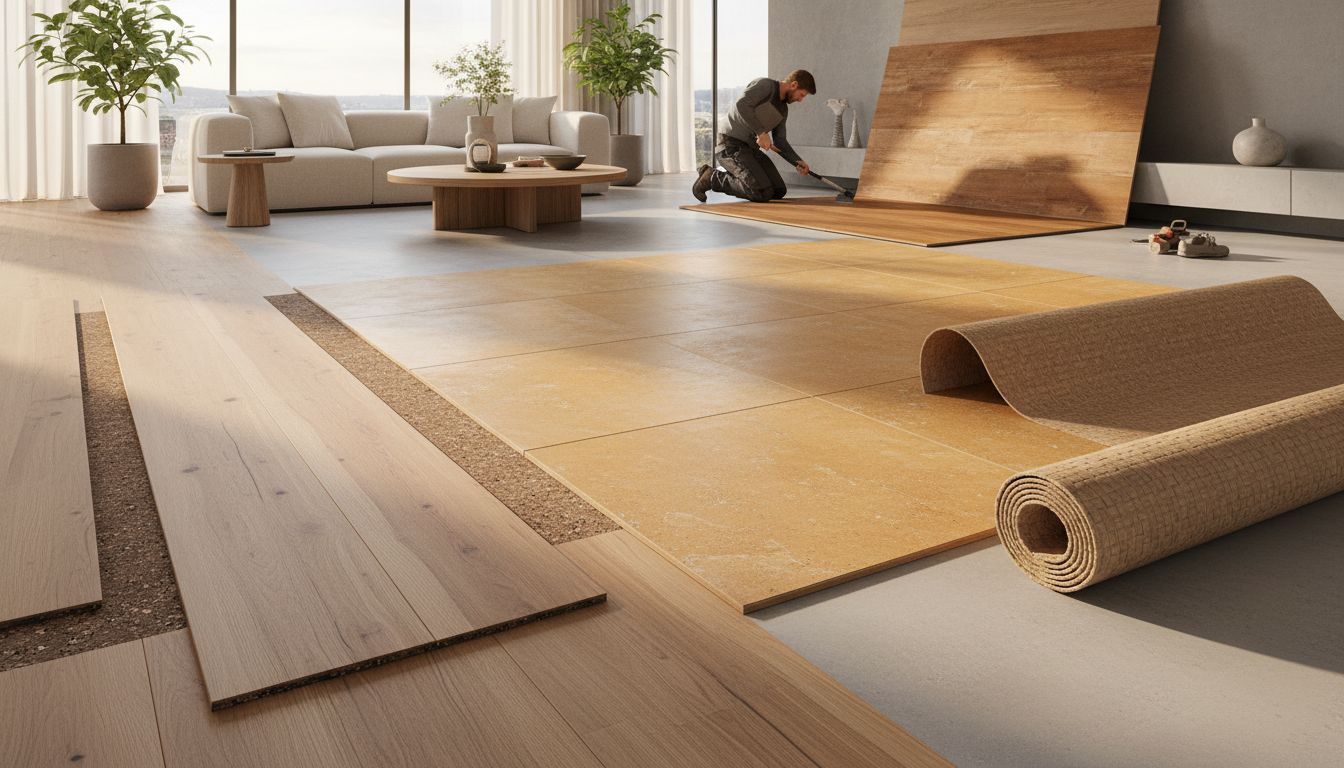
Warm-toned surfaces are shaping how homeowners and small business owners think about interiors in 2026. From countertops and backsplashes to flooring and wall cladding, soft ivories, sandstone-like creams, and earthy off-whites are moving beyond fleeting trends to become a foundational design language for calmer, more livable spaces.
As a local flooring and finishing contractor serving West Long Branch, NJ, we see these choices in real projects: clients asking for warmer palettes, larger surface pieces, and materials with recycled content. This article explains why warm-toned surfaces are gaining ground, how oversized formats and recycled cores fit into the picture, and what to consider when planning installations in New Jersey homes and businesses.
Why warm neutrals are leading 2026 surface design
Warm neutrals, think soft ivories, warm off-whites, and sandstone creams, are the dominant palettes for 2026 countertop and surface design. Industry coverage and reports show this shift toward warmer, nature-rooted tones, presenting a calmer alternative to the cool, stark surfaces of previous years. These shades pair naturally with wood, brass, and textured finishes to create layered, comfortable interiors.
Houzz’s Fall 2026 reporting highlights that warmth is becoming less of a trend and more of a foundation in design. That means homeowners are choosing palettes that work across multiple rooms and materials rather than chasing seasonal colors. For local projects, that translates into more request for finishes that harmonize with existing woodwork, trim, and flooring.
Design advantages go beyond aesthetics. Warm neutrals are forgiving in varied lighting conditions common in New Jersey homes, and they help mask minor wear over time. For clients who want a timeless look with lower risk of feeling dated, warm-toned surfaces offer a reliable, long-term choice.
Oversized formats: creating seamless, open surfaces
Large-format surfaces and oversized accents continue to gain traction as homeowners seek cleaner sightlines and fewer seams. Wide-plank flooring, large-format porcelain slabs, and oversized countertop panels create a more seamless, open look that visually enlarges spaces, a valuable benefit in smaller kitchens and compact commercial interiors.
Large porcelain and engineered slabs are no longer limited to countertops; recent coverage points to their use on walls, floors, and even exterior cladding. The result is a cohesive material language across surfaces that reduces busy transitions and simplifies maintenance, because fewer grout lines and joins mean fewer places to trap dirt.
From an installation perspective, oversized formats demand careful handling, precise subfloor and substrate preparation, and coordination with plumbing and cabinetry. As a local contractor, we plan for staging, transport, and safe installation to prevent damage and achieve the intended seamless effect.
Recycled cores moving from niche to mainstream
Sustainability is no longer a boutique selling point, recycled-content surfacing is moving into premium lines and broader availability. Notable examples include Caesarstone’s Icon collection, engineered with about 80% recycled materials, and Cosentino’s Earthic program, which emphasizes recycled content and industrial-water reuse. These product lines show manufacturers are embedding circular inputs into high-end surfacing.
When recycled cores and composite surfaces are paired with durability and warranty-backed performance, they change the value conversation. Homeowners and business owners tend to favor materials that reduce replacement cycles, aligning sustainability with long-term cost-effectiveness, an important factor for property owners in New Jersey considering lifecycle costs.
For practical selection, review manufacturer specifications for recycled content, maintenance needs, and guarantees. We recommend requesting technical sheets and sample swatches to confirm both the look and performance before committing to a large-format recycled-core slab for counters or cladding.
Pairing sustainability with nature-inspired aesthetics
Manufacturers are linking eco-minded positioning with softer, organic visual palettes. DuPont’s Corian Design 2026 Color Collection centers on a “Nature in Motion” theme, showing how solid surface and quartz brands are pairing sustainability narratives with earthy, tactile colors. The goal is to create surfaces that feel familiar and grounded while meeting sustainability expectations.
Texture is part of this story: matte, handcrafted, and imperfect finishes add a human touch that complements warm colors and recycled compositions. For clients seeking a lived-in, authentic feel, the combination of warm tones, tactile surfaces, and recycled cores delivers both visual warmth and environmental credibility.
In practice, pairing nature-inspired hues with reclaimed wood accents, warm metal hardware, and soft textiles helps create cohesive interiors. Our local projects often balance these elements to maintain durability for everyday use while achieving the desired aesthetic.
Brown, deep tones, and the move toward moodier palettes
Alongside warm neutrals, deeper earth tones like chocolate brown, burgundy, and dark green are rising in popularity. Trade coverage from the Surface Design Show and the 1stDibs 2026 designer survey highlights a growing appetite for richer, moodier hues that add depth and contrast to warm palettes.
These colors work well as accents, on an island base, a backsplash, or an accent wall, and can anchor a lighter surrounding scheme. When combined with oversized formats, these deeper tones can create dramatic, sophisticated statements without overwhelming a space.
For New Jersey homeowners, consider using deep hues sparingly in high-contact or focal areas, and pair them with durable, easy-care surface finishes. Our team can help specify stain-resistant materials and finishes that preserve the richness of darker tones over time.
Durability, long-term value, and installation considerations
Manufacturers are emphasizing durability and long-term value, which strengthens the sustainability case for recycled cores and composite surfaces. Choosing materials meant to last reduces replacement frequency and overall environmental impact, a practical sustainability win for clients investing in their properties.
Oversized formats and recycled-core products require more planning at installation: proper substrate reinforcement, careful seam placement, appropriate adhesive and grout choices, and transport logistics for large slabs. These technical details affect cost, timeline, and final performance, so hiring experienced local installers is essential.
We advise property owners to consider warranties, maintenance plans, and trade-offs between visual continuity and repairability. For example, a continuous large-format slab minimizes seams but can be more challenging and costly to repair if damaged; discussing these scenarios up front helps set realistic expectations.
Practical tips for choosing warm-toned, sustainable surfaces in NJ
Start with physical samples and mockups in your space. Warm-toned finishes change with light and adjacent materials, so viewing samples in morning and evening light helps avoid surprises. Bring samples into the actual kitchen or office and observe them alongside cabinetry, flooring, and fixtures.
Think about scale and format early. If you want a seamless look, plan to specify large-format porcelain or quartz slabs and confirm that doorways, stairways, and hall access can accommodate the pieces. Our installers can measure and advise on logistics, prefabrication options, and whether on-site seams are unavoidable.
Finally, prioritize reputable manufacturers that publish recycled content and performance data. Combine that product research with a local contractor’s practical guidance on installation, finishing, and maintenance. We offer installation, sanding/staining, and handyman services across West Long Branch and nearby areas to help clients realize these contemporary, sustainable looks correctly and efficiently.
Warm-toned surfaces, oversized formats, and recycled cores are not isolated trends but a coordinated movement toward more livable, durable, and responsible interiors. For homeowners and small business owners in New Jersey, these choices offer a way to future-proof design while supporting circular material practices.
If you’re considering an update, we can help evaluate materials, arrange samples, and plan installations that balance beauty, sustainability, and long-term value. Contact us to discuss your project and bring warm, sustainable surfaces into your home or business with reliable local craftsmanship.