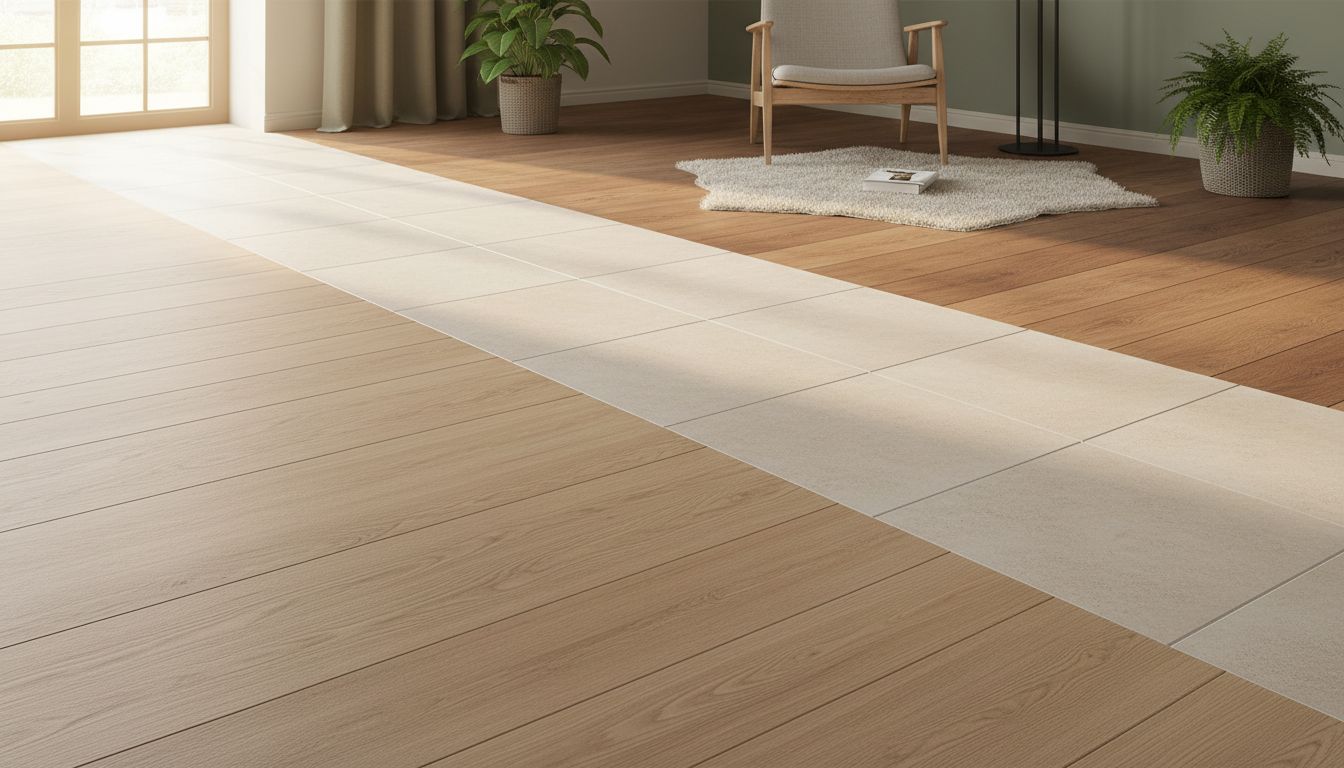
Homeowners and small business owners in West Long Branch, NJ are seeing real change in resilient flooring choices. Rigid-core flooring has moved well beyond a budget alternative; industry reporting shows resilient flooring reached $8.587 billion in 2025 (up about 2.5% from 2024), and rigid-core products remain central to that category growth. For anyone prioritizing quiet, warm-feeling floors that also meet sustainability goals, the technical and material advances in rigid-core are worth understanding.
As a local flooring and finishing contractor, we focus on installations that deliver on the new performance and environmental promises. Advances in standards, attached underlayment for acoustics, and design shifts toward warm neutrals mean homeowners can now choose floors that feel comfortable underfoot, reduce household noise, and are backed by stronger certification pathways. Below we walk through what’s changed and what it means for your next project.
Why rigid-core flooring leads the resilient category
Rigid-core flooring is increasingly defined by better standards and clearer construction, not just lower cost. The trade group RFCI describes rigid-core or multilayer flooring as modular flooring built around a rigid polymeric core, a decorative top layer, and optional attached underlayment. That construction gives the product category predictable performance while letting manufacturers innovate on acoustics, thermal feel, and visual realism.
The market growth to $8.587 billion in 2025, up roughly 2.5% from 2024, underscores that homeowners and specifiers are embracing resilient options for real-world living spaces. At the same time, suppliers are investing in U.S.-based production to improve supply-chain stability and shorten lead times, a meaningful benefit for local installs in New Jersey where timing and warranty support matter.
Importantly, the category is evolving away from the “cheap SPC” stigma. Recent quality problems with low-end SPC prompted buyers and specifiers to demand better performance, which has helped reposition rigid-core flooring as a premium, differentiated product line focused on durability, appearance, warmth, and acoustics rather than commodity pricing alone.
Standards, durability, and the 2025 SCS update
Standards are catching up with market expectations. A notable 2025 update to SCS-111 Certification Standard for Rigid Core Resilient Flooring included a technical correction and added a new fracture-resistance test method with a 17-lbf minimum criterion for vertical deflection. That kind of objective testing helps separate long-lasting products from fragile, low-performing alternatives.
Third-party certification pathways are increasingly important to buyers. RFCI and other industry bodies point to frameworks such as NSF/ANSI 332-2022 and updated SCS standards as ways to validate sustainability claims, indoor air quality performance, and mechanical durability. These certifications give homeowners and business owners confidence that the floor will perform over time and meet healthier-material criteria.
Quality-driven standards also address the market’s past growing pains: failures in low-end SPC accelerated the push toward measurable performance. For customers, that means specifying certified rigid-core flooring reduces the risk of premature failures and supports longer manufacturer warranties when properly installed.
Acoustics and warmth: underlayment as a design feature
Acoustic performance is now a selling point rather than an afterthought. Brands are marketing pre-attached underlayment specifically for noise reduction and improved thermal feel underfoot. Products like COREtec’s Soft Step explicitly promote being “quiet, warm and sustainably made” and often incorporate recycled materials into the construction.
Attached underlayments improve both sound and comfort. They reduce impact noise between rooms and floors below, and they soften the thermal sensation that can make hard floors feel cold. For homeowners in multi-family buildings or small businesses with customer-facing spaces, that quieter, warmer surface is a clear upgrade in daily comfort and perceived quality.
When planning an installation, it’s important to match the underlayment and core design to the space’s acoustical and thermal needs. A reputable local installer can verify subfloor conditions, ensure proper attachment or float installation, and select products whose integrated underlayments deliver the advertised noise and warmth benefits.
Sustainable materials and third-party validation
Sustainability is moving from marketing copy to specification requirement. The AIA’s 2025 Materials Pledge report shows 67% of reporting firms now integrate materials selection into a formal Sustainability Action Plan, and resilient flooring is among the most commonly reported sustainable product categories. That shift puts pressure on manufacturers to document recycled content, low-VOC manufacturing, and reduced hazardous substances.
Certification and low-emission criteria are shaping product differentiation. SCS and other certification programs emphasize indoor air quality, very low heavy metals, and limits on ortho-phthalates alongside mechanical criteria. RFCI highlights recyclable materials and third-party certifications as green-building drivers, and frameworks like NSF/ANSI 332-2022 provide pathways for claims to be validated.
For homeowners concerned about healthy indoor air and lifecycle impact, several resilient options now provide lower-emission construction without sacrificing performance. While natural alternatives such as linoleum, cork, or bamboo remain attractive for some projects, rigid-core flooring’s combination of durability, verified material claims, and improved manufacturing practices makes it a compelling sustainable choice for busy homes and commercial spaces.
Design trends: warm neutrals and authentic looks
Design taste has shifted away from cool grays toward warmer, earth-based palettes. Trend reporting for 2025,2026 highlights warm neutrals and earthy tones such as beige, warm beige, light clay, oatmeal, camel, warm taupe, caramel, terracotta, and warm browns. Rigid-core collections are responding with visuals that mimic natural wood and stone in these warmer hues.
Warm-toned floors make interiors feel more inviting and can better mask everyday wear and small imperfections in high-traffic areas. For small businesses like boutiques or cafés and for family homes, those colors create a welcoming backdrop for furnishings and customer interactions while aligning with current design preferences.
Manufacturers are also improving surface textures and print realism so that rigid-core floors convincingly echo natural materials without the maintenance drawbacks. For clients who want the look of hardwood with the durability and moisture resistance of resilient flooring, warm-toned rigid-core options offer a strong compromise.
Local installation considerations and why choose a trusted contractor
>
Local installation expertise matters more than ever. Supply-chain localization and increased domestic production shorten lead times, but correct installation still determines long-term performance. A trusted local contractor will assess subfloor flatness, moisture levels, and traffic patterns to recommend the right rigid-core product and underlayment option for your West Long Branch home or business.
Proper installation also affects acoustics and warranty coverage. Pre-attached underlayment needs the correct seam treatment and perimeter detailing to perform as advertised; floating installations require attention to transition strips and room geometry. Choosing an experienced installer minimizes the chance of the quality issues that once plagued the category.
As a local flooring and finishing provider, we combine product knowledge with on-the-ground service: professional installation, sanding and staining where appropriate, and handyman follow-up for trim and thresholds. That hands-on support ensures your warm-toned, low-noise rigid-core flooring looks great and performs for years.
Rigid-core flooring’s technical improvements, stronger standards, and sustainable material advances have changed the options available to homeowners and small businesses. With advances in acoustical design and warm-toned visuals, you no longer have to choose between comfort, style, and durability.
If you’re considering new flooring in West Long Branch, NJ, we can help you evaluate certified rigid-core products and select an installation approach that meets your comfort, noise, and sustainability goals. Contact us for a site visit and a practical recommendation tailored to your space.