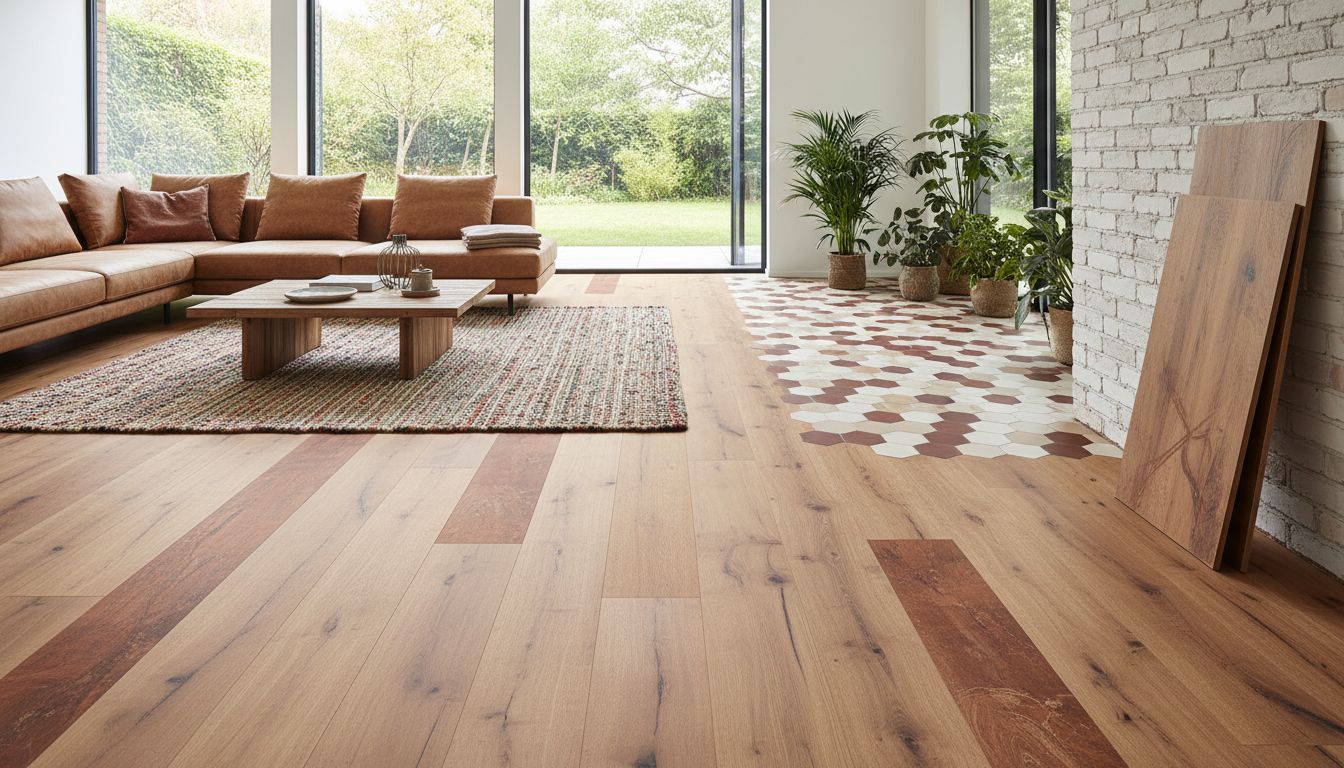
Homes and commercial spaces are changing beneath our feet. In 2026 the design conversation has moved from neutral minimalism to a warmer, more tactile language: midtone woods, sandy neutrals, and earthy accents are replacing the cool grays that dominated the previous decade. This shift isn’t purely aesthetic,manufacturers and installers are pairing these warmer palettes with improved waterproof constructions and higher recycled content, creating floors that feel inviting, perform reliably, and carry a smaller environmental footprint.
For homeowners and small business owners in New Jersey, that combination matters. Warm tones set a calm, balanced atmosphere for living rooms, lobbies, and storefronts alike, while waterproof flooring options expand where those looks can live,kitchens, bathrooms, mudrooms, and high-traffic commercial zones. Local contractors can translate these industry trends into practical, long-lasting installations that match style goals with durability and maintenance needs.
Why warm neutrals are reshaping interiors
Design authorities are calling 2026 the year of warm neutrals: creamy off-whites, taupes, soft golds, sand, and chocolate browns are leading palettes industry-wide. Houzz notes that warm neutrals are dominating surface and flooring design, and Floor Covering Weekly describes a pendulum swing toward rich wood tones that extend beyond floors into cabinetry, millwork, and furnishings.
That shift has practical roots. Midtone natural wood,and resilient products that reproduce it convincingly,tends to read as more relaxed and comfortable under everyday lighting. The warmth helps spaces feel grounded and adaptable to both traditional and contemporary décor, which is why designers and brands are prioritizing these hues in product launches.
For property owners in New Jersey, warmer tones make it easier to create inviting spaces that appeal to a broad audience. Whether you’re renovating a family kitchen in West Long Branch or updating a boutique office, choosing warm neutrals helps future-proof design choices and increases the chance that your floor becomes a welcome focal point rather than a hidden substrate.
Waterproof performance that doesn’t sacrifice style
Waterproof flooring continues to be a major selling point for moisture-prone rooms. Manufacturers like COREtec emphasize 100% waterproof constructions in their 2026 launches, and Tarkett calls sheet vinyl “the original waterproof floor.” These systems allow homeowners to specify warm, realistic looks in spaces that previously required tile or treated wood.
What’s changed is perception: waterproof flooring is no longer only about practicality. Brands are positioning these products as design-forward, offering textured surfaces, rich midtone decors, and finishes that read like real wood or natural stone. Forbo’s Marmoleum Cinch Loc Seal is a good example,pairing a waterproof core with a cork backing to create a warm, quiet underfoot experience while remaining kid- and pet-proof.
For local contractors, recommending waterproof flooring can add real value. It widens the scope of where attractive, low-maintenance floors can be installed, and it reduces the long-term risks of water damage in coastal and humid climates typical of New Jersey. Proper installation and sealing remain crucial to get the advertised longevity and warranty coverage.
Recycled materials and circular design enter mainstream flooring
Sustainability claims are maturing beyond simple badges,recycled content and circular design are now front-and-center messaging. Forbo’s Marmoleum lines, for example, highlight linseed oil, wood flour, and renewable inputs, and list recycled content levels of 17% up to 43% in certain collections. Interface and other commercial brands are building warmer palettes while emphasizing reused and recycled feedstocks.
Manufacturers are also pairing recycled inputs with durable finishes. Forbo’s Topshield Pro finish makes Marmoleum easy to clean and hard-wearing, linking sustainability with day-to-day performance. Other innovators, like Tarkett Home with ReNue (containing high percentages of post-industrial recycled wood) and Patcraft’s EcoWorx (designed for end-of-life recyclability), are proving that durability and circularity can coexist.
As a local flooring contractor, we see these options translating into real benefits for clients: lower embodied carbon, documented recycled content, and products engineered for long service life. For homeowners and small businesses keen on greener choices, specifying high-recycled-content resilient floors or PVC-free options can help meet environmental goals without compromising warmth or comfort.
Texture, realism, and the tactile comeback
Surface texture is becoming a key way manufacturers communicate quality. Houzz notes a preference for textured, rougher-hewn planks rather than glossy, ultra-smooth surfaces. Advances in printing and embossing have narrowed the gap between LVT and the natural materials it mimics, so realism now includes both visual grain and tactile depth.
These textured, warm surfaces contribute to a sense of calm and balance. Interface’s 2026 warm-color launches and Forbo’s Marmoleum Soul palette intentionally reference natural materials, using texture and tone to create environments that feel comfortable and resilient. The result is flooring that invites touch and feels substantial underfoot.
For installation and refinishing professionals, textured resilient floors require the same attention to subfloor preparation and acclimation as natural wood. Correct installation ensures the product’s print, bevels, and surface features align properly and wear as intended, preserving both performance and aesthetic over time.
Practical choices for New Jersey homes and small businesses
Choosing the right floor involves balancing look, performance, and lifestyle. Waterproof flooring now allows warm wood and earthy palettes in kitchens, bathrooms, and entryways,spaces that once pushed clients toward cold tile. Products with cork backings or softer underlays, such as Forbo’s Marmoleum Cinch Loc Seal, add comfort and sound reduction for busy households and small commercial settings.
Sustainability should also be practical. Look for documented recycled content levels and finishes that ease maintenance. Brands like Armstrong (Ingenious Plank) and Parador (Taterra) are responding to demand for PVC-free solutions, while manufacturers such as Tarkett and Interface offer high-recycled-content or recyclable options that align with lower-carbon goals.
When planning a project in West Long Branch or elsewhere in Monmouth County, consider traffic patterns, moisture exposure, and acoustic needs. Local installers can recommend suitable waterproof flooring options, coordinate transitions between different materials, and provide ongoing maintenance or refinishing services to extend the life of your investment.
Installation, refinishing, and long-term value
Good products need good installation. Waterproof constructions and resilient hybrids often require precise subfloor prep, moisture testing, and attention to transition details,areas where experienced contractors make a measurable difference. Correct installation helps protect manufacturer warranties and prevents premature wear or failure.
For existing wood floors, sanding and staining remain viable ways to move toward warmer tones without a full replacement. Refinishing can update color, repair surface wear, and apply more durable topcoats that improve stain and abrasion resistance. For clients who want the look of warm wood with the practicality of waterproof performance, hybrid or engineered systems may be the ideal compromise.
Finally, treat sustainable choices as investments. Durable, recyclable products and high-quality finishes reduce lifecycle costs and often perform better in high-moisture or high-traffic environments. Our role as a local contractor is to help you weigh upfront costs against long-term benefits and to deliver installations that meet both design intent and everyday needs.
The underfoot reinvention of 2026 blends warmth, waterproof performance, and recycled content into a coherent story that benefits homeowners and businesses alike. Whether you’re drawn to midtone wood aesthetics, need a fully waterproof solution for wet spaces, or want to prioritize recycled and PVC-free materials, the market now offers options that don’t force trade-offs between beauty and durability.
If you’re in New Jersey and ready to explore these trends for your home or business, a local, reliable flooring contractor can guide product selection, manage installation, and handle refinishing or handyman follow-up. The result is a floor that looks warm and welcoming, performs for years, and reflects thoughtful material choices,truly a reinvention worth stepping into.