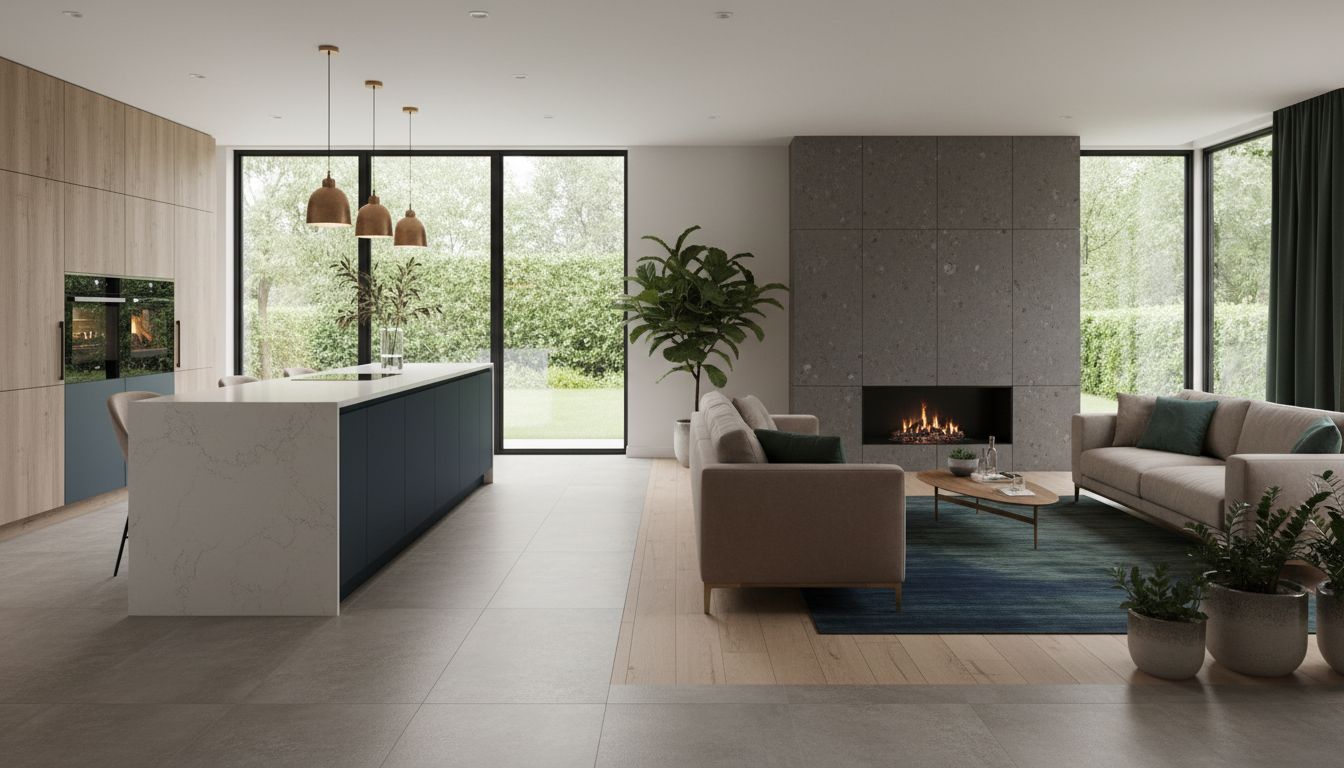
Low-carbon waterproof surfaces are reshaping how homeowners and small business owners approach open-plan living. By combining sustainability with seamless, durable finishes, these surface systems deliver the visual continuity and low maintenance many New Jersey residents want for modern homes and mixed-use spaces.
From microcement runs that cross floors and walls to mineral-based floors with low embodied carbon, the new generation of finishes supports whole-home continuity while reducing renovation waste. For property owners in West Long Branch and the broader Jersey Shore, that means durable, attractive interiors that are easier to keep clean and that align with long-term environmental goals.
Why open-plan homes are ideal for continuous, low-carbon finishes
Open-plan living emphasizes uninterrupted sight lines and multifunctional zones, which makes visual continuity a priority. Continuous surfaces remove thresholds, grout lines, and abrupt material changes, helping spaces feel larger and calmer,an especially valuable quality in smaller New Jersey homes and condos.
Low-carbon waterproof surfaces reinforce that aesthetic while answering practical needs: they simplify cleaning, reduce places where dirt and moisture collect, and allow homeowners to transition smoothly between kitchen, living, and bath without visual clutter. The result is a more cohesive, easier-to-maintain interior.
Designers are increasingly specifying all-over finishes not just for looks but for lifecycle benefits. A unified surface language can also cut replacement cycles and lower the cumulative environmental impact of finishes over a building’s life, which matters as sustainability standards move from trend to baseline practice in 2025.
Microcement and seamless wet-room finishes: a practical option
Microcement is a prominent example of a seamless finish being used across floors, walls, and counters to create that wet-room effect. When correctly installed and sealed, it offers waterproof performance and strong resistance to mold, making it practical for kitchens and bathrooms in open-plan layouts.
One major sustainability advantage is that microcement can be applied over existing substrates such as tiles or plaster, reducing demolition and the resulting waste stream. By avoiding a full strip-out, homeowners cut associated carbon emissions and disposal costs,an important consideration given current material-efficiency priorities.
For local contractors and property owners, microcement presents a retrofit-friendly pathway to upgrade interiors without the expense and disruption of removing underlying materials. Proper detailing and sealing are essential, so professional installation is recommended to achieve both waterproofing and long-term durability.
Low-carbon material choices: mineral, earth-based, and resilient products
Alongside continuous coatings, continuous mineral and earth-based flooring options are gaining attention for their low embodied carbon and thermal comfort properties. Earth-based systems can help regulate interior humidity and contribute to a healthier indoor environment, which aligns with growing low-VOC and wellbeing priorities.
Manufacturers are also innovating resilient flooring with lower carbon footprints. For example, newer non-PVC lines incorporate bio-based plasticizers and circular design principles to reduce per-tile carbon impacts by measurable amounts. These advances are backed increasingly by Environmental Product Declarations (EPDs), which give specifiers verifiable data rather than marketing claims.
For homeowners in New Jersey seeking durable, low-impact surfaces, this broader market means more choices: finishes that look honest and long-lived, materials with EPD-verified footprints, and options that balance performance with environmental responsibility.
Waterproofing, durability, and indoor-health benefits
Waterproof continuous surfaces simplify transitions between so-called “wet” and “dry” zones,critical in open-plan homes where a kitchen island may sit adjacent to a living area. A single, waterproof finish reduces the need for thresholds and makes cleaning and maintenance straightforward.
Durability matters for both lifecycle emissions and the homeowner’s budget. Long-lived surfaces minimize replacement cycles and waste that would otherwise flow into construction and municipal streams, a concern highlighted by recent EPA materials and waste data. Choosing repairable, robust finishes reduces long-term cost and environmental impact.
Designers also pair low-carbon surfaces with low-VOC products to improve indoor air quality. Selecting finishes that are both low-impact and low-emission supports healthier living environments,an important selling point for families, older homeowners, and small businesses seeking safer interiors.
Installation practices that cut waste and carbon
One of the clearest sustainability wins for low-carbon waterproof surfaces is the ability to apply them over existing floors and walls. This retrofit approach limits demolition, keeps material in place, and reduces the embodied emissions associated with manufacturing and transporting new substrate materials.
Official material-footprint and waste accounting in recent years has reinforced the importance of material efficiency. Homeowners who opt for thin, durable finish systems,rather than wholesale replacement,help reduce the resource demand tied to renovations, consistent with guidance from recent sustainability reports.
For property owners in West Long Branch and nearby communities, choosing a contractor experienced in retrofit installation is key. Proper surface preparation, sealing, and detailing make the difference between a long-lasting finish and one that requires premature replacement.
Specifying with transparency: EPDs, circularity, and material honesty
Specifiers and consumers increasingly expect transparency: verified EPDs, clear information about bio-based content, and circular design commitments. These data-driven tools allow homeowners and small-business clients to compare products on measurable environmental performance rather than branding alone.
The “material honesty” aesthetic,favoring authentic textures, purposeful imperfections, and classic stone looks,supports durability and longevity. Surfaces that look and feel like real materials encourage careful maintenance and repair rather than quick replacement, extending useful life.
Choosing products with documented carbon footprints and repair-friendly detailing supports both sustainability goals and long-term value. For local projects, a contractor who can help interpret EPDs and recommend options that meet performance, health, and budget priorities is especially useful.
Low-carbon waterproof surfaces are changing how open-plan living is designed and maintained: they offer visual continuity, reduced maintenance, and measurable sustainability benefits. In practice, the best results come when homeowners pair the right materials,microcement, mineral floors, or lower-carbon resilient tiles,with careful installation and verified product data.
If you’re considering an update in West Long Branch or the surrounding New Jersey area, think about whole-home continuity and retrofit-friendly finishes to reduce waste and improve durability. Speak with a trusted local contractor to review options, review EPDs, and plan an installation that meets your performance and environmental goals.